
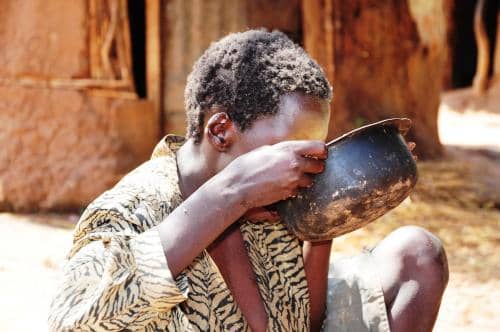
The Food Rights Alliance (FRA) has called on the government to urgently strengthen food security interventions and disaster preparedness as prolonged dry conditions continue to worsen hunger in Karamoja while threatening agricultural production in other parts of the country.
In a statement, the organisation warned that the unfolding crisis was not unexpected, arguing that government had received credible weather forecasts pointing to prolonged dry conditions but failed to respond early enough to protect vulnerable communities.
The alliance said the dry spell, which started shortly after the anticipated onset of the rainy season in March, has left thousands of households struggling to access food after widespread crop failure. Families, it said, are increasingly relying on desperate coping mechanisms, with some surviving on local brewing remnants while children have turned to mining and quarry work in search of income to buy food.
FRA warned that the crisis extends beyond Karamoja, noting that government forecasts had predicted dry conditions across several regions, including parts of southwestern, central and eastern Uganda. It said reduced rainfall had already affected crop production in some districts, raising fears of lower harvests and worsening food insecurity if urgent measures are not taken.
Executive Director Agnes Kirabo said the current situation reflected years of missed opportunities to prepare despite repeated warnings from meteorological agencies and food security experts.
"To us at FRA, this is not a surprise. We have the data. We have the forecasts. We have every reason to prepare. Yet here we are burying our dead and rationing relief," Ms Kirabo said.
She argued that Uganda has sufficient natural resources to produce enough food but lacks the political commitment to invest in systems that would protect communities from recurring hunger crises.
"The Karamoja hunger crisis is not primarily a climate crisis. It is a governance crisis. The region has adequate rainfall and water route from Masaba and Sebei regions to achieve food self-sufficiency. What it lacks is political will to strategically invest in a full-blown water infrastructure to boost production in the region. We have repeatedly called on the Office of the Prime Minister to prioritize early warning signs of drought and hunger and set aside plans and resources for timely responses. However, timely release of food aid remains a challenge. As such, what Karamoja lacks is accountable governance that treats the right to food as non negotiable," Ms Kirabo said.
The organisation also expressed concern over the rising cost of staple foods, saying many poor households can no longer afford basic commodities despite their availability in markets. It warned that increasing food prices were compounding the effects of crop failure, particularly for vulnerable families.
FRA further noted that some schools in the Lango sub-region had started sourcing food supplies from western Uganda because local shortages had disrupted feeding programmes, highlighting the wider impact of the prolonged dry conditions.
The organisation urged Cabinet to fast-track approval of the revised Food and Nutrition Policy and called on Parliament to expedite enactment of the National Food and Nutrition Bill to strengthen the country's food governance framework.
It also appealed to the government to activate emergency food relief in drought-affected districts, release contingency funds to district disaster management committees, operationalise early warning systems that automatically trigger emergency responses, invest in water infrastructure in Karamoja and strengthen local food production initiatives.
According to the alliance, long-term investment in education, health services, infrastructure and economic diversification remains essential to addressing the underlying causes of chronic food insecurity and building resilience against future climate shocks.
